Abstrax Tech Vs Duty Free Terpenes: Which One Holds Up at Scale?

Abstrax Tech and Duty Free Terpenes both sell terpenes to cannabis brands, but they build and document them in very different ways. Most Abstrax lines are botanical blends rebuilt from non-cannabis isolates, and their standard COA checks appearance, odor, specific gravity, water activity, and residual solvents with no terpene breakdown. Duty Free Terpenes starts every profile from real flower and backs batches with ISO 17025 lab COAs listing 20+ terpenes by percentage, plus pesticide, heavy metal, microbial, and mycotoxin results.
// On this page
You found a flavor that slapped and built a whole SKU around it. Then the reorder tasted a little off, landed late, or quietly vanished from the catalog.
So you pulled up the paperwork to figure out what changed. The certificate said the oil was a yellowish liquid that smelled tropical, and that was about it.
Every terpene supplier will tell you the molecules are the same no matter who sells them, and on paper that checks out. What changes your product lives around the molecule: where it came from, what the lab checked, and whether you can buy the exact same thing again in six months. This breakdown puts Abstrax Tech and Duty Free Terpenes side by side on those points, using both companies’ own paperwork instead of their homepage copy.
Aren’t All Terpenes the Same? Why the Name on the Bottle Matters
If limonene is limonene, it’s fair to ask why anyone should care who bottles it. The short answer is that you’re never buying one molecule. You’re buying a mix, a ratio, and a set of receipts, and that’s where suppliers stop looking alike.
A Limonene Is a Limonene, Until It Isn’t
Chemically, limonene from an orange peel is the same molecule as limonene from OG Kush. Abstrax says this on their own FAQ page, and they’re right. The problem is nobody vapes a single molecule, and a finished profile is dozens of compounds at specific ratios plus whatever minor stuff tagged along from the source.
Strain names don’t save you here either. A 2022 research talks about how almost 90,000 commercial cannabis samples from six US states were analyzed, and the labels on them didn’t consistently line up with what was chemically inside.
That same study found individual terpenes rarely went above 0.5% by weight in flower, with total terpenes averaging around 2%. The ratios between those tiny numbers are the whole game.
Source, Paperwork, and Supply Are Where Brands Split
Once the molecule is off the table, a supplier comes down to source, paperwork, and supply, and those decide whether it’s a partner or a headache.
- Source: Is the profile pulled from a plant, or rebuilt from isolates to smell like one?
- Paperwork: Does the COA show what’s in the bottle by percentage, and what contaminants it was screened for?
- Supply: Will the same profile exist, in stock, the next time you place a production order?
They’re boring, and they’re exactly what separates a cart that gets reordered from one that gets returned.
Abstrax Tech Vs Duty Free Terpenes at a Glance
Here’s how the two stack up, pulled from both companies’ own product pages, COAs, and FAQs.
| Category | Abstrax Tech | Duty Free Terpenes |
| Where the terps come from | Mostly botanical isolates blended to mimic strains, plus selectively bred hemp for the Live Series | Real flower, with cannabis-derived hydrocarbon profiles and hemp terps grown and extracted on a California farm |
| Terpene breakdown on the COA | Not listed on the standard COA | Compound-by-compound percentages |
| Contaminant panels | Residual solvents | Pesticides, heavy metals, microbials, mycotoxins, residual solvents |
| Who signs the COA | In-house QC chemist | Harrens Lab, ISO 17025 accredited |
| Catalog style | Huge, with many series and frequent drops | Tight menu across six flavor families |
| Best fit | Discovery, R&D, non-inhalable edibles and drinks | Production runs that need hard numbers |
Duty Free Terpenes Overview

Duty Free Terpenes is a California terpene supplier built for brands done paying for flavor-lab imitations, and every profile starts with real flower. The hydrocarbon line is cold-extracted cannabis-derived terpenes, and the natural line uses hemp terps grown and extracted on a California farm, finished with an all-natural flavor topper.
Batch COAs come from Harrens Lab, an ISO 17025 accredited lab, and they list each terpene by percentage alongside pesticide, heavy metal, microbial, and mycotoxin results. No middlemen, no mystery blends, and nothing you can’t read off a lab sheet before you pour.
Core Product Categories
The menu is split into six flavor families, each built for a different kind of shelf. Some are for heads who want gas, and some are for the customer who wants their cart to taste like a Saturday morning cartoon.
Hydrocarbon Flavors
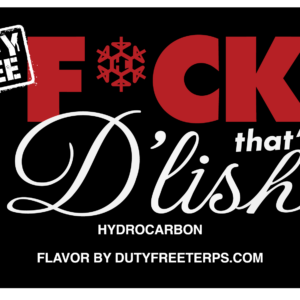
Hydrocarbon is the gas section of the menu. These are cannabis-derived terpenes cold-extracted from real flower, so they carry the dank, diesel-and-spice backbone that botanical blends usually miss. It’s built for premium carts and customers who can smell a fake.
A couple worth pulling a sample of. Jet Fuel is the pick for sativa-leaning lineups, opening on pungent diesel before citrus and pine take off, with beta-caryophyllene, limonene, and linalool leading its COA. Tropicanna Cookies runs two profiles at once, bright tangerine rolling into sweet dough, and the beta-caryophyllene and humulene at the top of its COA give it that black pepper and hops grounding.
Strain Replication
Strain Replication is for SKUs that live and die by a name customers already know. The whole job is tasting like the strain on the label, so someone grabbing a familiar name gets the flavor they were expecting.
Two that do their names justice. London Pound Cake is a dessert strain done right, with buttery vanilla and lemon zest up top and a little diesel and nuttiness underneath, built on a beta-caryophyllene, limonene, and linalool lead. Strawberry Cough is the brighter pick, fresh strawberry with citrus peel and a light pine finish, and its terpinolene-heavy base keeps it from tipping into candy.
Candy Flavors
Candy is the most faked flavor family on the market, and customers notice fast when a gum or cinnamon profile tastes like plastic. These put hemp terps from real flower under the sweetness, so there’s something herbal holding it up instead of one flat sugar note. Our piece on cannabis flavor enhancers covers what goes into the flavor side.
If you’re building a fun-first lineup, start here. Bubble Gum is the nostalgia play, classic pink gum with fruity florals and an herbal punch on the close, and the terpinolene, ocimene, and alpha-pinene leading its COA are that backbone. Big Red is for brands with nerve, cinnamon spice and warm clove building into sweet heat, a profile most suppliers skip because warm spice goes harsh fast.
Fruit Flavors
Fruit profiles have nowhere to hide. One off note and a melon cart tastes like a scented marker, so the base has to be clean and ripe. These are the all-day carts people rebuy.
The melon pair is where this family shines. Double Melon layers sweet honeydew over watermelon rind with fresh herbs and light citrus, while Hella Honeydew commits to one ripe melon with a fresh pine middle. Both lead with alpha-pinene, myrcene, and limonene on their COAs, which is why they finish crisp instead of sugary.
Soda Flavors
Soda flavors are pure nostalgia, the soda-fountain stuff people grew up on. The catch is depth, because without the woody, spicy layers under the sweet, every soda flattens into the same generic cola.
Two throwbacks worth a pour. Root Beer is the classic done right, sassafras root and vanilla cream with anise and herbal bark biting through, backed by limonene, ocimene, and beta-caryophyllene on its COA. Cherry Cola is the grown-up version, dark cherry rolling into cola spice and warm cinnamon before sweet vanilla closes it out.
Syrup Flavors
Syrup is the heaviest, sweetest family on the menu, built for culture SKUs where the name does half the selling. The trick is keeping all that sugar from going one-note.
These two nail it. Purple Drank is the flagship, grape soda and sweet syrup with a lavender edge that comes from the linalool sitting behind terpinolene and ocimene on its COA. Hi-Tec Cherry is the loud one, maraschino cherry and candy filling up top with tart berry underneath, and its limonene lead keeps the sweetness bright.
Here’s how the six families stack up side by side.
| Category | Flavor Vibe | Built For | Example (Top COA Terpenes) |
| Hydrocarbon | Gassy, dank, diesel meets dessert | Premium carts and strain-forward vapes | Jet Fuel: beta-caryophyllene, limonene, linalool |
| Strain Replication | Classic strain character | Strain-named SKUs | Strawberry Cough: terpinolene, ocimene, myrcene |
| Candy | Sweet, nostalgic, loud | Flavor-forward disposables | Bubble Gum: terpinolene, ocimene, alpha-pinene |
| Fruit | Clean, single-fruit, crisp | All-day carts | Double Melon: alpha-pinene, myrcene, limonene |
| Soda | Fizzy fountain throwbacks | Nostalgia lines | Root Beer: limonene, ocimene, beta-caryophyllene |
| Syrup | Heavy, sweet, culture-coded | Culture SKUs | Purple Drank: terpinolene, ocimene, linalool |
What Makes Duty Free Terpenes Stand Out?
The short answer is receipts. Every lab sheet shows the exact terpene breakdown, so you match addition rates to numbers instead of guessing, and the same COAs cover the contaminant panels your finished product needs to pass state testing. Pricing stays sane because there’s no middleman marking up oil somebody else extracted.
If you want to see the paperwork before you commit, hit us up and we’ll send it over.
Abstrax Tech Overview

Abstrax Tech is an Irvine, California terpene company founded in 2017. They sell botanical terpene profiles, flavored blends, organic hemp-derived terpenes, edible flavoring, and single terpene isolates to brands making vapes, pre-rolls, gummies, and drinks. We already did a full Abstrax terpenes review, so this section sticks to how their lineup is organized.
Core Product Categories
Abstrax splits its catalog into a handful of core categories, and a couple of them overlap more than you’d expect. Here’s what each one covers and where it gets tricky.
Organic Live Hemp Terpene Profiles
Hemp terps from dry-farmed Tennessee fields, steam-distilled within 30 minutes of harvest and molecularly distilled, with the 2025 harvest carrying USDA Organic certification. Each bottle is single-source from one cultivar. The catch is that their own FAQ says these aren’t CDT and may need several more breeding generations to catch up with high-THC cannabis, and several SKUs were sold out at the time of writing.
Botanical Terpene Profiles
Strain profiles rebuilt from botanical isolates, split into three series. Signature Series profiles are made with the cultivators behind famous strains, like Sherbinskis for Bacio Gelato. Native Series adds cannasulfur compounds for a skunky, gassy aroma and is labeled by the source material it was modeled on. Premium Strain Profiles, like Blue Dream and Fire OG, skip the sulfur compounds for a more discreet smell.
Flavoring for Edibles
Built for gummies and drinks instead of vapes. The Gellies line covers fruit, candy, and dessert flavors made for cannabis gummies at a suggested 1 to 2% dilution, often paired with food acids like malic acid. It’s built on PG and ethanol, so it isn’t meant for inhalation. Beverage flavoring runs as custom systems for THC sodas, sparkling waters, and tonics.
Terpene Isolates
Around 30 single terpenes, each one a compound found natively in cannabis, sold in 5 to 100 gram sizes. Abstrax says outright they don’t chase purity percentages and source by smell and taste instead, with the leftover share made up of other aromatic compounds. For a formulator doing math by the gram, an isolate with no stated purity is a tough sell.
What Reddit Thinks About Abstrax Tech
Company pages always sound great, so here’s what buyers say when nobody’s selling them anything. The r/Terpenes crowd is split, mostly by product line.
One commenter didn’t hold back:
“There stuff tastes like boof street carts.”
Another review thread went after the flavor instead of the branding:
“They got really cool packaging but all their stuff tastes like chemical cologne. I don’t know how they mess up hemp derived terpene so much. You’re literally just distilling terpenes but yeah for people saying this is good.”
And on the other side, one user was a big fan:
“IMO they have the best terps on the market. They just released a collaborative study about newly discovered VOCs which influence flavor and aroma. Incredible company doing the work to help us understand this plant. Try their native series.”
That study is legit. Published research identified a family of sulfur compounds, led by 3-methyl-2-butene-1-thiol, as the main source of cannabis’s skunky smell, and Abstrax’s team was part of it. The complaint is that results swing hard by lineup, and that kind of inconsistency is painful to plan production around.
Where Abstrax and Duty Free Terpenes Split for Formulators
This is the part homepage comparisons skip. Flavor is subjective, but paperwork, sourcing, and supply aren’t.
What a COA Tells You (and What It Leaves Out)
Abstrax’s standard COA template lists five checks: appearance, odor, specific gravity, water activity, and residual solvents. No terpene breakdown, no pesticides, no heavy metals, and it’s signed by an in-house QC chemist. On their compliance page, dozens of SKUs link to that same generic sample certificate, run on a single Pineapple Express lot, instead of a lot-specific COA.
Compare that to a recent Jet Fuel batch COA from Harrens Lab. It lists more than 20 terpenes by percentage, screens 60+ pesticides, tests arsenic, cadmium, lead, and mercury, and runs microbials and mycotoxins on top of residual solvents. The Double Melon batch COA from the natural line carries the identical panel.
Pesticides and metals aren’t paranoia checks. According to published research, processing plant material into oils can concentrate pesticide residues in the extract, and research suggests the cannabis plant is a known hyperaccumulator of metals. That metals study also traced much of the contamination in finished carts to the hardware, which is why you want your oil ruled out before it touches a cartridge.
The Batch Drift Argument, Flipped
Abstrax’s FAQ makes a fair point against cannabis-derived terpenes. Flower changes from harvest to harvest, so CDT drifts, and their pitch is that a blend rebuilt from isolates stays repeatable.
But drift you can see is drift you can manage, because per-batch percentages let you compare lots and nudge your addition rate before filling a single cart. A COA with no terpene numbers can’t tell you whether anything moved, and their isolates page says they source by smell and taste instead of purity percentages.
Knowing your total terpene load matters for safety too. A 2017 research talks about how myrcene, limonene, and linalool broke down into methacrolein, benzene, and other nasty byproducts at dabbing-level heat. Abstrax suggests capping added terpenes at 8% in vapes, and you can only respect a ceiling like that if you know what’s in the bottle, which our guide on mixing distillate and terpenes walks through.
Built From the Plant Vs Built to Smell Like It
Abstrax’s own FAQ says their products don’t contain any cannabinoids or any compounds from cannabis, which gets confusing next to their hemp line. Their Live Series hemp, by their own admission, isn’t CDT and may need several more breeding generations to catch up with high-THC cannabis.
Every Duty Free Terpenes profile starts with real flower. The hydrocarbon line is cold-extracted cannabis-derived terpenes, and the natural line is hemp terps grown and extracted on a California farm, finished with a natural flavor topper. You get the plant’s own mix of minor compounds instead of a rebuild of the parts a lab decided were worth keeping.
Catalog Churn, Sold-Out SKUs, and Lead Times
Abstrax drops new stuff constantly, and the catalog spans 18 flavor families and more than a dozen series. That’s fun for R&D and less fun when your best-seller’s profile sits at “sold out,” like several Live Series profiles at the time of writing.
Their terms and conditions say orders usually ship in 24 to 48 hours, but items that aren’t in stock can take up to 10 business days to ship. For scheduled fills, a two-week slip means idle hardware and a hole on the shelf. That risk applies to any supplier, so ask these before you lock in a profile:
- Continuity: How long has this exact SKU been on the menu, and is it staying?
- Stock: Is it sitting on a shelf right now, or made after I order?
- Paperwork: Will each new batch come with its own COA, or a template?
- Scale: Can the same profile be supplied at bulk volume without a reformulation?
So Which One Fits Your Product?
Abstrax makes sense for R&D, international shipping, or gummies and drinks where their edible systems are purpose-built. If you’re filling carts on a schedule, need to pass state testing, and want flavor from the plant with numbers to prove it, the paperwork gap is hard to ignore.
| Factor | Abstrax Tech | Duty Free Terpenes |
| COA scope | Five basic checks, no terpene percentages, often a sample template | Full panel with terpene percentages per batch |
| Contaminant screening | Residual solvents | Pesticides, metals, microbials, mycotoxins, solvents |
| Batch drift visibility | No terpene numbers to compare lot to lot | Lot-to-lot percentages you can track |
| Source | Botanical isolates or bred hemp | Real flower, cannabis-derived and hemp |
| Supply risk | Big rotating catalog, some SKUs sold out, up to 10 business days when out of stock | Tighter six-family menu |
| Best for | R&D, edibles, beverages | Production vape runs |
Why Duty Free Terpenes Is the Safer Bet for Production Runs
Duty Free Terpenes was built for the brands that got burned by pretty labels and thin paperwork. The menu covers hydrocarbon gas, strain replicas, candy, fruit, soda, and syrup, and every profile starts with real flower instead of a lab rebuild.
Batch COAs from an ISO 17025 lab show each terpene by percentage, so your formulation math starts with real numbers and your compliance team gets pesticide, metal, microbial, and mycotoxin results in the same document. No middleman keeps pricing competitive, and the flavors hit hard enough to get carts reordered.
Stop guessing what’s in the bottle. Shop our products and put real terps from real flower in your next run.
Sites We Used for Homework
- PLOS ONE: “The phytochemical diversity of commercial Cannabis in the United States” – journals.plos.org/plosone/article?id=10.1371%2Fjournal.pone.0267498
- ACS Omega: “Identification of a New Family of Prenylated Volatile Sulfur Compounds in Cannabis Revealed by Comprehensive Two-Dimensional Gas Chromatography” – pubs.acs.org/doi/10.1021/acsomega.1c04196
- Journal of Chromatography A: “Pesticides and trace elements in cannabis: Analytical and environmental challenges” – sciencedirect.com/science/article/abs/pii/S0021967319310787
- Scientific Reports: “Tracking metal presence in cannabis vaping products from source to inhalation” – nature.com/articles/s41598-025-17004-2
- PMC: “Toxicant Formation in Dabbing: The Terpene Story” – pmc.ncbi.nlm.nih.gov/articles/PMC5623941/
Frequently Asked
Mostly no. Abstrax's botanical lines, including the Signature, Native, and Premium Strain series, are rebuilt from non-cannabis botanical isolates to mimic strain profiles. Their Organic Live Hemp line comes from selectively bred hemp, and the company states it doesn't label those as cannabis-derived terpenes because they come from hemp rather than high-THC cannabis.
Their standard COA template doesn't. It lists appearance, odor, specific gravity, water activity, and residual solvent results, signed by an in-house QC chemist. Product pages name dominant terpenes and flavor tags, but compound-level percentages aren't part of the published certificate, which makes it harder to predict how a profile behaves at a given addition rate.
Usually not without testing. Two profiles with the same strain name can carry very different terpene ratios, so a straight swap can change flavor, viscosity, and how the oil performs in hardware. Pull COAs for both, compare the leading terpenes and totals, run small test batches, and adjust your addition rate before committing to a production run.
A useful terpene COA lists each terpene by percentage, not just the dominant names. It should also cover residual solvents, pesticides, heavy metals, microbials, and mycotoxins, come from an accredited third-party lab, and match the batch number you received. A generic sample certificate only tells you what one lot looked like at one point in time.
Stop imitating. Start with real terps.
Every profile in the shop is cannabis-derived, batch-tested, and duty free.
See the menu